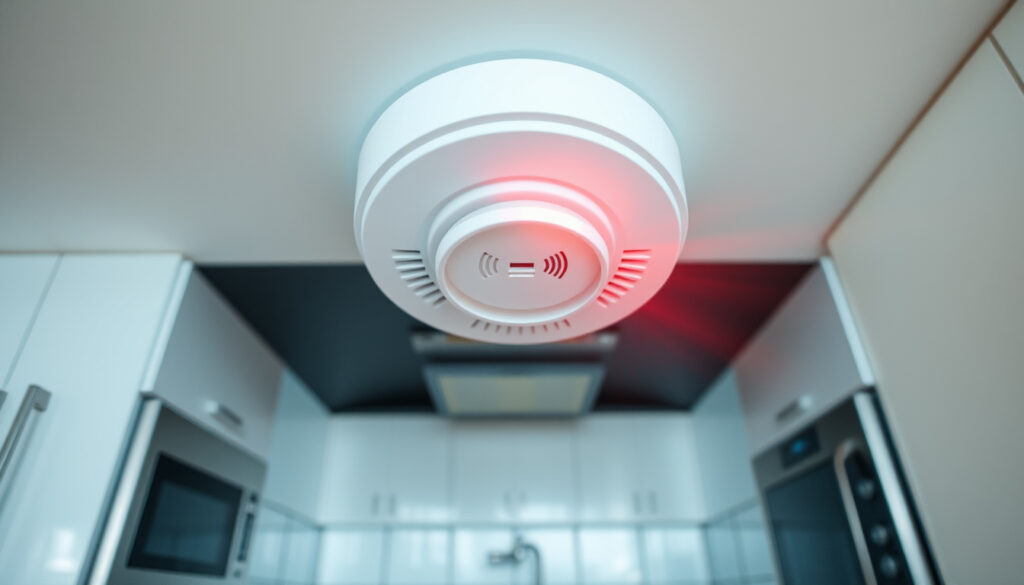
How to Test Smoke Detectors: Step-by-Step Testing Guide
If your smoke detector went off right now, would you trust it? Most people press the test button once when they install a new unit and then forget about it for months—or years. That gap is exactly where fire safety breaks down. This guide walks through the official steps fire authorities and manufacturers recommend, what those blinking lights actually mean, and how to stop false alarms without disconnecting the unit entirely.
Recommended test frequency: Weekly · Button hold time: 5–10 seconds · Battery replacement: Every 12 months · Unit lifespan: 10 years
Quick snapshot
- Weekly testing is the standard recommended by Kidde (Kidde)
- Test button checks sensor and electronics together (Kidde)
- Batteries typically last one year before replacement is needed (Prepared Hero)
- Not all hardwired models self-test electronics automatically
- False alarm triggers vary by model and installation environment
- Exact wiring diagnostics require professional assessment
- Smoke detectors reach end of reliable life at 10 years from manufacture
- Battery warnings typically begin after 12 months of use
- Weekly testing schedule keeps issues detectable early
- Test your units using the steps below
- Replace batteries and clean units on schedule
- Plan for full unit replacement at the 10-year mark
The following table summarizes the key operational parameters for smoke detectors based on verified manufacturer data.
| Specification | Value |
|---|---|
| Test frequency | Weekly |
| Button press duration | 5–10 seconds |
| Battery replacement cycle | Every 12 months |
| Unit lifespan | 10 years |
| Cleaning schedule | Every 6 months |
| Low battery chirp interval | Every 30–60 seconds |
| Kidde normal blink | Every 30–40 seconds |
| First Alert normal blink | Every 60 seconds |
| Hardwired reset hold | 5 seconds |
How do you test if a smoke detector is working?
The test button is your primary tool for checking whether a smoke detector is functioning. According to Kidde (a smoke alarm manufacturer), you should press and hold the test button until the alarm sounds—this confirms both the sensor and the electronics are working together.
Using the test button
To test a battery-operated unit, stand directly beneath it or use a broom handle to reach if the unit is mounted high. Press and hold the test button firmly for 5–10 seconds. A working detector will emit a loud, continuous alarm. If nothing happens, the battery may be dead or the unit itself could be faulty.
For hardwired smoke detectors with battery backup, the test button works the same way, but you may need to hold it slightly longer. If only one unit sounds during a test of interconnected alarms, check the interconnect wiring as Kidde recommends.
What to expect during the test
A properly functioning smoke detector will produce a loud, piercing alarm that lasts as long as you hold the button—typically 5–10 seconds until the alarm sounds at full volume. The moment you release the button, the alarm should stop. If the alarm continues after release, power issues or a stuck sensor may be at play.
If the test alarm is noticeably quieter than it used to be, that is a warning sign. Batteries weaken over time, and a faint alarm may not wake you in an actual emergency. Replace batteries immediately and retest.
What can falsely set off a smoke detector?
False alarms frustrate homeowners and lead some to disconnect units entirely—exactly the wrong response. Several common household factors can trigger an alarm even when no fire is present.
Common triggers like cooking or steam
Cooking smoke is the single most frequent cause of false alarms in homes. Steam from showers, high humidity environments, and aerosol sprays near the detector also commonly trigger responses. The National Fire Protection Association (NFPA) notes that these nuisance alarms are a leading reason people disable their smoke detectors.
To address this, ventilate the area by opening windows or using a fan. Press the Test/Hush button on the initiating unit—the one with the rapid flashing light—to silence interconnected alarms. Chesapeake Electric advises identifying which unit is flashing rapidly (every second) as that is the initiating detector.
Dust and insects
Dust buildup inside the detector chamber can cause irregular blinking or false alarms. Clean units every six months using a vacuum with a soft brush attachment on the exterior vents only. Never spray water, cleaning chemicals, or compressed air directly into the detector. Prepared Hero recommends removing the battery, holding the test button for 20 seconds to discharge residual power, then gently vacuuming the vents.
If the test button fails to produce any alarm sound, do not assume the unit is broken. Dead batteries, loose wiring (in hardwired units), or a defective unit are all possibilities. Replace the battery first, then retest. If nothing happens, the unit needs replacement.
Why is my smoke detector blinking red?
A blinking red light on a smoke detector is not automatically a problem. The meaning depends on the blink pattern, the brand, and whether a sound accompanies the light.
Low battery indicator
A blinking red light paired with a chirping sound every 30–60 seconds almost always indicates a low battery. Chesapeake Electric confirms this is the most common cause of combined blinking and chirping. Replace the battery immediately—do not remove the battery to stop the chirp, as that leaves you with no protection.
Normal power status
A blinking red light without any sound may simply indicate normal operation. Kidde smoke detectors normally flash red every 30–40 seconds during standby. First Alert detectors blink every 60 seconds under normal conditions. Wawanesa U.S. advises that manufacturers vary in how they use red blink patterns, which is why checking the specific manual for your model matters.
When the blink pattern changes suddenly—becoming faster, irregular, or continuous without an alarm trigger—that often signals a fault condition. Sensor malfunction, dust contamination, or wiring problems can all produce erratic blinking. In these cases, professional inspection or unit replacement is the safest response.
Ignoring a blinking red light because it has always blinked that way can mask a gradual battery drain or developing fault. When the pattern changes, treat it as a check-required signal, not a decoration.
Do hardwired smoke detectors self test?
Hardwired smoke detectors connect directly to your home electrical system and include a battery backup. Whether they self-test depends entirely on the model and manufacturer.
Self-test features
Some models include automatic self-testing that periodically checks the electronics and alerts you to faults through a changing blink pattern or test chirp. However, no self-test replaces the need for manual button testing. Kidde explicitly recommends weekly manual testing regardless of any self-test features your unit may have.
If your hardwired detector is part of an interconnected system and only one unit alarms during a test, that indicates a wiring or interconnect issue that needs investigation.
Manual testing required
Always use the test button weekly. For hardwired units with battery backup, testing also confirms the battery backup is functional. According to Kidde, to reset a hardwired detector after an alarm or troubleshooting: remove the unit from its bracket, disconnect the power at the breaker, remove the backup battery, then hold the test button for 5 seconds to fully discharge residual power before reconnecting.
Hardwired alarms chirping after installing a new battery suggest a terminal connection problem. Jack Cooper notes this can indicate damaged wiring or mounting bracket contacts that need professional assessment.
Hardwired systems offer reliable power but introduce wiring complexity. If your hardwired detector blinks red without a clear cause—particularly after a power outage—checking the circuit breaker first, then calling an electrician, is safer than guessing.
How to test a smoke detector without the test button?
The test button is the recommended method for routine checks. Alternatives exist for situations where the button is inaccessible, damaged, or you want to test the actual smoke sensor response rather than just the electronics.
Using actual smoke or canned smoke
Canned smoke aerosols—sometimes called smoke detector test spray—are available from safety equipment suppliers. These products generate a controlled amount of smoke-like vapor that can trigger the sensor without requiring actual fire or combustion. This method tests the physical sensor itself, not just the electronics.
However, Vivint cautions that this method carries risks. If the canned smoke does not dissipate quickly or is used improperly, it can itself trigger a sustained false alarm. Most fire safety professionals reserve sensor testing with aerosol sprays for annual professional inspections rather than weekly homeowner checks.
Professional methods
For comprehensive testing that goes beyond the test button, professional fire safety technicians use calibrated smoke detection test chambers and electrical diagnostics. They can verify interconnect wiring in hardwired systems, measure sensor sensitivity, and identify units that have degraded beyond their 10-year reliable lifespan.
If a smoke detector fails the test button check, is more than 10 years old, or shows erratic behavior you cannot resolve by replacing the battery and cleaning the unit, professional replacement is the recommended path. According to fire safety guidance, no amount of troubleshooting replaces an aging or malfunctioning unit when lives are at stake.
Upsides
- Weekly button test confirms basic electronics and battery backup
- Cleaning every six months prevents dust-related false alarms
- Annual battery replacement prevents mid-night chirp situations
- 10-year replacement schedule ensures sensor reliability
- Interconnected systems provide whole-home alerting
Downsides
- Test button only checks electronics, not actual smoke sensor response
- False alarms from steam or cooking lead some users to disable units
- Hardwired wiring issues require professional diagnosis
- Canned smoke testing risks creating sustained false alarms
- Erratic blinking without sound can indicate intermittent faults hard to diagnose
When should you replace your smoke detector?
Smoke detectors have a finite lifespan. Even with fresh batteries and regular testing, the sensors inside degrade over time. Fire safety guidance consistently cites 10 years as the replacement threshold from the manufacture date printed on the back of the unit.
Beyond age, replace a unit immediately if it fails to alarm during a test button check after replacing the battery, if it chirps continuously after new battery installation, if the blink pattern becomes erratic or stops entirely, or if it has been involved in a real alarm event where smoke entered the chamber. Chesapeake Electric notes that sensor contamination from a real fire event can permanently degrade responsiveness.
If multiple interconnected alarms sound simultaneously and you cannot identify an initiating unit or obvious cause (cooking smoke, steam), treat it as a potential real emergency. Jack Cooper advises calling the fire department when in doubt—it is better to rule out a real threat than to ignore one.
Smoke detectors have a 10-year lifespan. Replace if older than 10 years from manufacture date on the back.
— Jack Cooper (Safety Guide)
The smoke alarm is desensitized by pushing the Test/Hush button on the smoke alarm cover.
— Kidde (Manufacturer Guidance)
Related reading: 3-Way Switch Wiring Diagram: Step-by-Step Guide
The Coastline Brief step-by-step guide echoes these steps by stressing monthly test button presses to detect silent malfunctions before emergencies strike.
Frequently asked questions
How often should I test my smoke detector?
Kidde recommends testing smoke detectors at least once a week by pressing and holding the test button until the alarm sounds. This weekly frequency aligns with fire safety standards and ensures early detection of any battery or electronics issues before they become critical.
What does a green light on a smoke alarm mean?
A solid green light on many smoke detectors indicates the unit is receiving constant AC power. This is normal for hardwired units. On battery-operated units, a green light may indicate the battery is properly seated and functioning. Check your specific model manual for the meaning of indicator colors on your unit.
How do I clean a smoke detector?
Remove the battery first, then hold the test or hush button for 15 seconds to discharge residual power. Use a vacuum with a soft brush attachment on the exterior vents only. Avoid water, cleaning chemicals, or touching the internal sensor. Reassemble and test immediately after cleaning.
When should I replace my smoke detector?
Replace any smoke detector that is more than 10 years old from the manufacture date on the back label. Also replace units that fail the test button check after battery replacement, chirp continuously despite a fresh battery, show erratic blinking patterns, or have been involved in a real smoke event.
What if the test button does not work?
If pressing the test button produces no alarm sound, try replacing the battery first. For hardwired units, check that the circuit breaker has not tripped. If a new battery and power check still produce no result, the unit is defective and must be replaced immediately.
Are smoke detectors required by law?
Building codes in most U.S. jurisdictions require working smoke detectors on every level of a home and outside each sleeping area. Requirements vary by state and municipality, and many codes now mandate hardwired, interconnected units in new construction. Check your local building authority for specific requirements.
How to silence a false alarm?
Press the Test/Hush button on the initiating detector—the one flashing rapidly every second. If your system is interconnected and multiple units are sounding, silencing the initiating unit typically stops all of them. Open windows or use fans to clear steam, smoke, or aerosols from the area.
More related posts
 Breaking News Headlines Today: Top Stories & Irish Source Insights
 Green Day Super Bowl 2026: Performance, Setlist & Controversy
 Rachel Zegler: Snow White Controversy, Ethnicity & Career
 Location Voiture Économique Magog: Best Budget Deals & Tips
 Jonah Hill: Weight Loss, Brother’s Death & Private Marriage
 Ilia Topuria Next Fight – Gaethje Unification at White House 2026
 Bureau en Gros Shawinigan – Address, Hours & Services
