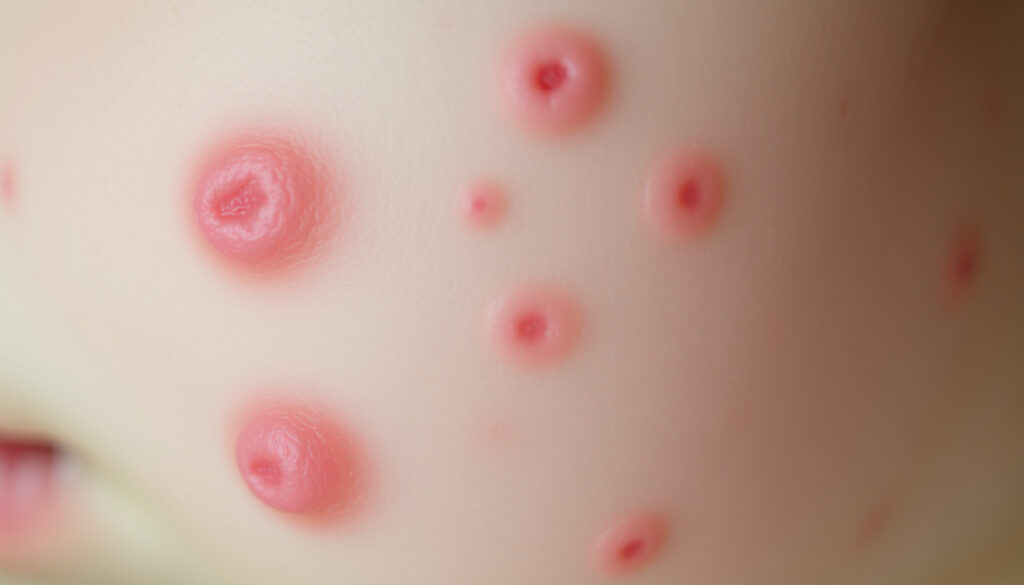
Early Stage Chicken Pox: Symptoms, Stages & Pictures
Chickenpox begins with vague flu-like symptoms before distinctive spots appear, and recognizing these early signs enables faster isolation to protect others. The rash progresses through predictable stages over 7–10 days, with each lesion moving from flat spots to itchy blisters to scabs within about 24 hours.
Initial symptoms before rash: Fever, aches, 2–3 days ·
Stage 1 rash: Small spots appear ·
Stage 2 rash: Spots become blisters ·
Stage 3 rash: Blisters become scabs ·
Classic sign: Itchy fluid-filled blisters
- 10–21 days post-exposure with no visible symptoms Mayo Clinic
- Contagious from prodrome before rash becomes visible Stat Specialty Hospital
- Small red flat spots (macules) on chest, back, face first Stat Specialty Hospital
- Red spots turn into fluid-filled blisters within 24 hours Stat Specialty Hospital
- New crops appear for 3–5 days, with all stages present simultaneously Seattle Children’s Hospital
| Stage | Timeline | Appearance |
|---|---|---|
| Incubation | 10–21 days | No visible symptoms |
| Prodrome | 1–2 days before rash | Fever, aches, fatigue, headache |
| Rash – Spots | Days 1–2 | Small red flat spots on chest, back, face |
| Rash – Blisters | Days 2–5 | Fluid-filled vesicles, 1–3 mm diameter, very itchy |
| Rash – Scabs | Days 5–10 | Blisters burst, crust over, healing begins |
How to know if chickenpox is starting?
Initial symptoms before rash
The varicella-zoster virus causes chickenpox, and the first signs appear long before any spots show on the skin. During the incubation period of 10–21 days after exposure, the virus replicates silently while the person remains well Mayo Clinic. Once the prodrome begins, fever, tiredness, loss of appetite, and headache emerge approximately 1–2 days before the characteristic rash appears CDC. These early symptoms often feel like ordinary flu, which makes early identification challenging without knowing about recent exposure.
Fever and feeling unwell
Children may develop a mild fever ranging from 100°F to 102°F (37.8°C to 38.9°C), accompanied by general malaise and body aches that signal the immune system fighting the virus Vinmec. Loss of appetite is common, particularly in younger children who may refuse food they would normally enjoy. Headache can range from mild to moderate, and fatigue may leave a child wanting to rest more than usual. The combination of these symptoms appearing together—particularly when they precede a rash by 1–2 days—should raise suspicion for chickenpox if exposure is known or suspected.
What does chicken pox look like before it starts?
Pre-rash phase
Before the first spots emerge, the skin may appear completely normal despite the virus already spreading internally. Some individuals report a tingling or burning sensation in areas where spots will later appear, though this is not universal GoodRx. The prodrome phase typically lasts 24–48 hours and represents the period when viral shedding begins, meaning the infected person can transmit chickenpox to others even though no visible rash exists CDC. During this window, the person may feel genuinely ill with fever and body aches but has no outward signs of the disease.
Day 1 spots
The rash typically begins as small, red, flat spots called macules that first appear on the chest, back, or face Stat Specialty Hospital. On fair skin, these spots appear red or pink, while on darker skin tones they may present as purple, brown, or match the surrounding skin color entirely NHS. This variation in appearance makes chickenpox harder to identify on brown and black skin, which can delay diagnosis and appropriate isolation measures NHS. The spots are usually 1–3 mm in diameter at this stage and may be mistaken for insect bites or other common rashes.
“The classic sign of chickenpox is a rash that turns into itchy, fluid-filled blisters which eventually become scabs.”
— CDC, US Health Authority
What can be mistaken for chickenpox?
Rash similarities
Several childhood illnesses produce rashes that can initially resemble chickenpox. Hand, foot, and mouth disease causes spots on the hands, feet, and mouth but rarely spreads to the trunk in the same pattern as chickenpox GoodRx. Impetigo, a bacterial skin infection, creates honey-colored crusted patches rather than the fluid-filled blisters characteristic of chickenpox. Insect bites, particularly from mosquitoes or fleas, may produce multiple red spots but lack the rapid progression to vesicles and the distinctive pattern of distribution seen in chickenpox.
Monkeypox vs chickenpox
While monkeypox has received increased attention, key differences distinguish it from chickenpox. Monkeypox lesions are typically larger, more painful than itchy, and progress through distinct stages with all lesions at the same stage at any given time GoodRx. Chickenpox, by contrast, shows multiple stages simultaneously—spots, blisters, and scabs coexist on the same person because new crops appear over several days Seattle Children’s Hospital. Monkeypox also typically begins with lymph node swelling, which chickenpox does not produce.
“Chickenpox progress within 24 hours through the next 5 stages: Small red bumps, Thin-walled water blisters, Cloudy blisters, Open sores, Dry brown crusts.”
— Seattle Children’s Hospital, Pediatric Hospital
How do I confirm if my child has chickenpox?
Rash progression
The most reliable confirmation comes from observing the characteristic rash progression. Each individual lesion begins as a flat red spot, becomes a raised papule, fills with clear fluid to form a vesicle, and eventually crusts over as a scab Mayo Clinic. This entire cycle takes approximately 24 hours per lesion, but new spots continue appearing for 3–5 days, creating the simultaneous presence of multiple stages Seattle Children’s Hospital. The rash typically starts on the head and trunk before spreading body-wide, including potentially to the mouth, eyelids, and genital area CDC. Hundreds of spots can develop in moderate cases, though the number varies significantly between individuals GoodRx.
When to see a doctor
Most chickenpox cases in healthy children resolve without specific antiviral treatment, but certain signs require medical attention. Mouth sores that interfere with drinking may cause dehydration and warrant evaluation Stat Specialty Hospital. If spots appear unusually large, inflamed, or accompanied by severe pain, bacterial infection of the lesions may have occurred. Difficulty breathing or severe headache could indicate rare but serious complications requiring emergency care. Adults and adolescents typically experience more severe disease and benefit from antiviral medications when started early Stat Specialty Hospital.
What’s the worst day for chicken pox?
Peak itchiness
Day 4 typically marks the peak of discomfort for most individuals with chickenpox. By this time, numerous blisters have formed and the body continues producing new spots while existing lesions become increasingly itchy Rachael Jess Blog. Fever often spikes on this day, and mouth or lip spots may develop, making eating and drinking uncomfortable Rachael Jess Blog. The combination of systemic illness and localized skin discomfort can leave children (and adults) feeling miserable. Antihistamines and cool baths provide symptomatic relief, while keeping fingernails trimmed reduces skin damage from scratching Stat Specialty Hospital.
Contagious period
A person remains contagious until every single blister has scabbed over, which typically occurs around days 7–10 of the illness CDC. This means isolation should continue until healthcare providers confirm that all lesions have crusted, not merely when the person begins feeling better. The rash phase itself generally lasts 5–10 days from the appearance of the first spots Mayo Clinic, with most people recovering fully within 1–2 weeks from first exposure Dr O’Donovan. Avoiding school, daycare, or public spaces until cleared prevents the highly contagious virus from spreading to vulnerable individuals.
Additional Stages and Recovery
Beyond the initial spotting phase, chickenpox lesions follow a predictable healing pattern that helps gauge recovery progress. Day 5 often marks the beginning of scab formation even as new blisters continue appearing elsewhere on the body Rachael Jess Blog. By day 7–10, most lesions have crusted and the risk of spreading infection drops significantly CDC. Residual marks may persist for weeks, particularly where lesions were scratched or became secondarily infected, though most fade over time.
Chickenpox Treatment Overview
Treatment focuses on symptom management since antiviral medications work best when started within 24 hours of rash onset. Cool baths with colloidal oatmeal soothe itchy skin, while antihistamines provide additional relief from itching that can persist for days. Acetaminophen reduces fever and discomfort, though aspirin should never be given to children with chickenpox due to Reye’s syndrome risk. Keeping skin clean and dry helps prevent bacterial superinfection, and loose clothing prevents irritation of sensitive areas.
Prevention Strategies
Vaccination remains the most effective chickenpox prevention method, with the varicella vaccine preventing infection in approximately 98% of recipients after two doses CDC. The CDC recommends children receive the first dose at 12–15 months and the second at 4–6 years of age. For unvaccinated individuals exposed to chickenpox, varicella zoster immune globulin (VarIZIX) or antiviral medication within 3–5 days may reduce symptom severity or prevent infection entirely. Avoiding contact with infected individuals during the contagious period—particularly pregnant women, newborns, and immunocompromised persons—prevents potentially severe outcomes.
Spotting the subtle day-one rash becomes clearer when comparing it to pictures of chicken pox stages, which trace the evolution from red spots to itchy blisters.
Frequently Asked Questions
Can chickenpox clear up in 3 days?
Chickenpox rarely clears up completely in 3 days. The rash typically lasts 5–10 days, with new spots appearing for 3–5 days Mayo Clinic. Most people remain contagious until all blisters have scabbed, usually around days 7–10 CDC. Very mild cases in vaccinated individuals may resolve faster, but the standard course follows this week-long pattern.
How do I know if it’s definitely chicken pox?
Definitive diagnosis comes from recognizing the characteristic progression: flat spots become raised bumps, then fill with clear fluid to form vesicles, then crust over—all within 24 hours per lesion, with multiple stages visible simultaneously over 3–5 days Seattle Children’s Hospital. The classic sign is an itchy, fluid-filled blister that crusts CDC. When uncertain, healthcare providers can confirm through clinical examination or viral testing.
What is early stage chicken pox treatment?
Early treatment focuses on symptom management: cool baths with colloidal oatmeal, antihistamines for itching, acetaminophen for fever (never aspirin in children), and keeping nails short to prevent skin damage from scratching Stat Specialty Hospital. Antiviral medications like acyclovir work best when started within 24 hours of rash onset and are typically recommended for adolescents, adults, or those at risk of complications CDC.
What does early stage chicken pox look like in adults?
Adult chickenpox follows the same progression but typically causes more severe symptoms: higher fever, more extensive rash with hundreds of spots, greater fatigue, and increased risk of complications including pneumonia and encephalitis Stat Specialty Hospital. Adults who never had chickenpox or received vaccination face substantially higher complication rates than children CDC. Mouth sores may be more extensive, increasing dehydration risk Vinmec.
Are chickenpox pictures helpful for early diagnosis?
Visual references showing day-by-day progression help identify the characteristic pattern Immunize.org, but appearance varies significantly based on skin tone, individual response, and whether scratching has damaged lesions NHS. Early spots appear red or pink on fair skin but may be purple, brown, or skin-colored on darker tones, making them harder to see GoodRx. Pictures should supplement—not replace—professional medical evaluation when diagnosis is uncertain.
How long are you contagious with early chickenpox?
Contagion begins during the prodrome phase 1–2 days before spots appear CDC and continues until all blisters have scabbed over, typically around days 7–10 of illness CDC. This means isolation must begin at the first sign of any prodrome symptoms if exposure is known, not merely when the rash becomes visible. The person remains contagious throughout the period when new spots continue appearing.
What are chickenpox stages day by day?
Days 1–2: Red spots appear on chest, back, and face Stat Specialty Hospital. Days 2–5: Spots become fluid-filled blisters within 24 hours of appearing Seattle Children’s Hospital. Days 5–7: Blisters burst and form crusts while new spots continue emerging Stat Specialty Hospital. Days 7–10: Remaining scabs heal and fall off, with all stages present simultaneously throughout Seattle Children’s Hospital.
Sources
- CDC – Chickenpox Signs and Symptoms
- Mayo Clinic – Chickenpox Symptoms and Causes
- NHS – Chickenpox
- Seattle Children’s Hospital – Chickenpox
- Immunize.org – Varicella Image Library
- Stat Specialty Hospital – What Does Chickenpox Look Like
- GoodRx – What Chickenpox Looks Like
- Vinmec – Early Onset Chickenpox Symptoms
- Dr O’Donovan – Chickenpox Overview
- Rachael Jess Blog – Stages of Chickenpox
Related: When Do Babies Start Laughing – Age, Signs and Milestones
More related posts
 Best Smoothie Recipes for Weight Loss – High-Protein Low-Calorie Guide
 East Coast Credit Union: Services, Pros & Cons Guide
 Megan Moroney: Age, Relationships, Songs, Net Worth
 Spousal Open Work Permit Canada: Eligibility & IRCC Rules 2025
 Canada Stat Holiday 2025: Complete Guide to Public Holiday and Date
 Where the Crawdads Sing: True Story, Killer Revealed & More
 Seau de Crabe Laval – Verified Restaurant Facts
 Cast of The Woman in Cabin 10: Actors and Characters (2025)
