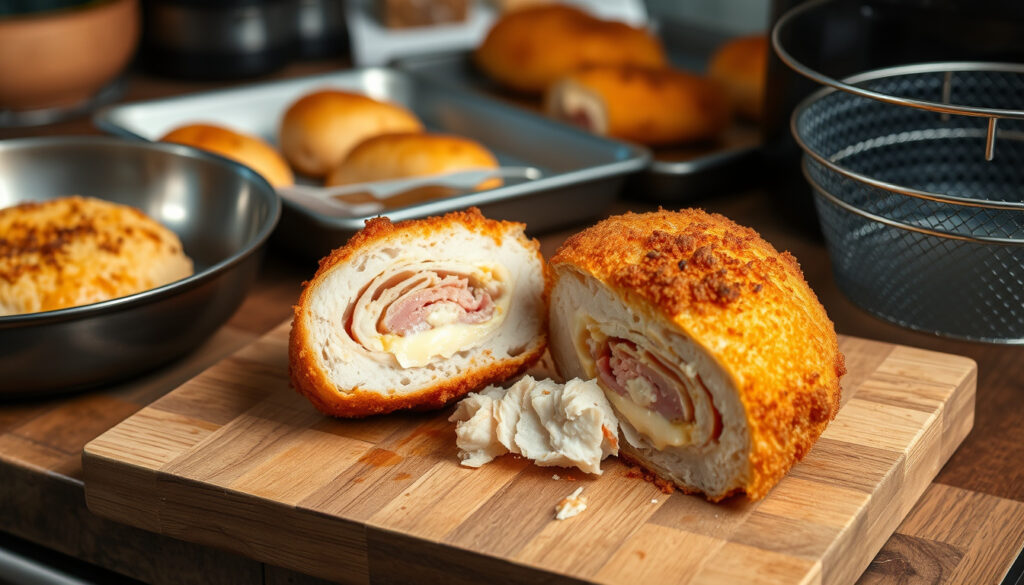
Chicken Cordon Bleu Recipe – Fried, Baked or Air Fryer Guide
Chicken cordon bleu brings together tender chicken, savory ham, and melted Swiss cheese in a golden breadcrumb coating. This classic dish has earned its place as a restaurant favorite, yet home cooks can achieve equally impressive results with the right techniques. Whether you prefer the crispy crunch of deep frying, the convenience of baking, or the modern approach of an air fryer, understanding the fundamentals makes all the difference.
The appeal of chicken cordon bleu lies in its layered flavors and textures—each bite delivers a contrast between the juicy chicken inside and the crisp exterior. While the dish carries a French name and associations, its true roots trace to Swiss culinary traditions, where the technique of stuffing and breading meats became a mark of culinary excellence.
This guide walks through every aspect of making chicken cordon bleu at home, from selecting the right ingredients to troubleshooting common problems. The recipes and tips presented here draw from established cooking sources and aim to make the process accessible for cooks of all experience levels.
How Do You Make Chicken Cordon Bleu?
Creating chicken cordon bleu at home involves five core stages: preparation, assembly, breading, cooking, and sauce-making. Each stage requires attention to detail, but none demands advanced skills. The process rewards patience, particularly when pounding the chicken to an even thickness.
4 Ways to Make Chicken Cordon Bleu
20 min prep | 20 min cook
Deep-fried for maximum crunch
15 min prep | 30 min cook
Healthier alternative with similar results
15 min prep | 15 min cook
Quick cooking with crispy outcome
20 min prep | 45 min cook
Family-friendly layered version
Key Insights and Pro Tips
- Pound chicken to an even thickness, roughly half an inch, for consistent cooking throughout
- Chill assembled rolls for 30 minutes before breading to help them hold their shape
- Freeze cheese slices briefly before rolling to prevent melting and leaking
- Double-dip the breading—flour, egg, then crumbs again—for an extra crunchy coating
- Use toothpicks sparingly or wrap tightly in plastic to avoid metal during cooking
- Ensure internal temperature reaches 165°F for food safety
- Let cooked chicken rest for 5 minutes before slicing to retain juices
Recipe Snapshot
| Category | Details |
|---|---|
| Prep Time | 20 minutes |
| Cook Time | 20-25 minutes |
| Total Time | 40-45 minutes |
| Servings | 4 |
| Calories per Serving | Approximately 450-600 |
| Difficulty Level | Intermediate |
What Is Chicken Cordon Bleu?
Chicken cordon bleu describes a dish featuring chicken breasts stuffed or topped with ham and Swiss cheese, coated in breadcrumbs, then cooked until golden and crispy. The name itself deserves explanation—”cordon bleu” translates to “blue ribbon” in French, originally referring to a mark of culinary excellence rather than any actual color.
Origins and Cultural Background
Despite its French-sounding name, chicken cordon bleu traces its roots to Swiss cuisine. The technique of wrapping meat in a ribbon-like manner became associated with skilled cooking, eventually earning the “cordon bleu” designation that chefs still recognize today. The dish gained widespread popularity in mid-20th century America, when restaurants began featuring it as an elegant yet approachable entrée.
The classic combination of chicken, ham, and cheese reflects Swiss culinary traditions, where cheese and cured meats frequently appear together. Modern adaptations have spread globally, with each region adding subtle variations to suit local tastes.
The Name Explained
The term “cordon bleu” originally described the blue ribbon awarded to recipients of the Order of the Holy Ghost, the highest French order of merit. In culinary contexts, it came to signify exceptional cooking skill. When applied to this chicken dish, it emphasizes the dish’s status as something beyond everyday fare—a recipe worth mastering.
Can You Bake or Air Fry Chicken Cordon Bleu?
Baking and air frying offer practical alternatives to deep frying without sacrificing the signature crispy coating. Both methods produce satisfying results while reducing the mess and health concerns associated with submerging food in hot oil.
Oven-Baked Method
Baking provides the most straightforward path to chicken cordon bleu. Preheat the oven to 375-400°F. Place breaded chicken pieces on a greased baking sheet, ensuring adequate spacing between each piece. Bake for 20-30 minutes, flipping halfway through, until the exterior turns golden brown and the internal temperature reaches 165°F.
For a foolproof approach, try this layered variation: Place chicken breasts in a baking dish, top each with a slice of ham and Swiss cheese, then sprinkle buttered panko breadcrumbs over the top. Bake at 375°F for 30-35 minutes until bubbling and golden.
Air Fryer Approach
The air fryer has revolutionized home cooking by delivering crispy results with minimal oil. Preheat the air fryer to 375°F. Arrange breaded chicken pieces in a single layer, working in batches if necessary. Cook for 12-15 minutes, checking halfway through, until the coating achieves a deep golden color.
Air fryers work by circulating hot air rapidly around food, simulating the effects of deep frying while using a fraction of the oil. This method works particularly well for chicken cordon bleu because the breadcrumb coating crisps up effectively in the dry heat environment.
Casserole Variation
For feeding larger groups, a casserole-style preparation offers practical advantages. Layer flattened chicken breasts in a 9×13 baking dish, adding ham and cheese between each layer. Pour the Dijon-Parmesan sauce over the top and bake at 350°F for 35-40 minutes until bubbly and cooked through.
Regardless of cooking method, always verify doneness with a meat thermometer inserted into the thickest part of the chicken. The internal temperature should reach 165°F for safe consumption. Carryover cooking will raise temperatures an additional 5 degrees during rest.
What Cheese and Sauce Go Best with Chicken Cordon Bleu?
The choice of cheese significantly impacts the final result. Swiss cheese remains the traditional choice due to its excellent meltability and mild, slightly nutty flavor that complements without overwhelming the other ingredients.
Selecting the Right Cheese
Swiss cheese, particularly Gruyère, provides the ideal balance of melt quality and taste for chicken cordon bleu. The holes in Gruyère actually indicate proper aging and good moisture content, which translates to even melting. Deli-sliced Swiss works well for layered preparations, while a block of Gruyère grated fresh offers superior results for rolled versions.
Alternative options include provolone for a sharper flavor or fontina for extra creaminess. Some recipes combine cheeses, mixing Swiss with cheddar or mozzarella to adjust melt behavior and flavor intensity.
The Signature Dijon Cream Sauce
A creamy Dijon-Parmesan sauce elevates chicken cordon bleu from good to exceptional. The sauce combines butter, flour, milk, Dijon mustard, chicken bouillon, Worcestershire sauce, and grated Parmesan cheese. White wine or chicken stock can adjust the consistency, while honey adds a touch of sweetness.
Preparing the sauce requires melting butter, whisking in flour to create a roux, then gradually adding liquids while stirring continuously. The mixture simmers until it thickens to a coating consistency, at which point the Dijon and Parmesan get folded in.
Prepare the sauce while the chicken cooks to ensure it arrives at the table hot and fresh. A properly made sauce should coat the back of a spoon without dripping immediately—a sign of the right thickness for drizzling over individual servings.
Cheese that escapes during cooking wastes flavor and creates cleanup challenges. To minimize this, place cheese slices on a plate in the freezer for 10 minutes before assembling. Chilling the assembled rolls for 30 minutes before cooking also helps the cheese firm up enough to stay contained.
Step-by-Step Timeline
Timing plays a crucial role in achieving chicken cordon bleu perfection. Each phase requires specific attention, and understanding the progression helps coordinate the overall cooking process.
- 0-10 minutes: Prepare the chicken by slicing breasts horizontally and pounding to even thickness. Layer or roll with ham and Swiss cheese.
- 10-15 minutes: Chill assembled pieces for 30 minutes if time permits. Dip each piece in flour, then egg, then press firmly into breadcrumbs.
- 15-35 minutes: Cook using preferred method—bake at 375-400°F for 20-30 minutes, air fry at 375°F for 12-15 minutes, or fry at 350°F for 8-10 minutes.
- 35-40 minutes: Rest cooked chicken for 5 minutes, prepare sauce, and plate with vegetables or starch accompaniments.
Authentic vs. Modern Twists
| Established Traditions | Modern Adaptations |
|---|---|
| Chicken breast stuffed with ham and Swiss cheese | Turkey or pork cutlets as alternatives |
| Classic breadcrumb coating with flour and egg | Panko, crushed cornflakes, or almond flour |
| Swiss origins with French associations | Fusion versions incorporating Asian or Mexican flavors |
| Deep frying for crispy exterior | Baking, air frying, or grilling |
| Dijon cream sauce accompaniment | Mushroom sauce, hollandaise, or cheese sauce |
| No single official recipe; regional variations exist | Low-carb versions skipping breading entirely |
Tips for Success and Common Mistakes
Even experienced cooks encounter challenges with chicken cordon bleu. Understanding the most frequent pitfalls helps avoid disappointment.
Overstuffing ranks among the most common errors. Adding too much ham or cheese creates pressure during cooking that forces filling out through the breading. Using 1-2 slices of each, distributed evenly, maintains structural integrity.
Uneven pounding leads to inconsistent cooking. Thicker portions remain undercooked while thinner areas dry out. Placing chicken between sheets of plastic wrap or in a sealed zip-top bag prevents tearing while allowing even pressure distribution.
Skipping the resting or chilling step weakens the final structure. Allowing assembled rolls to firm up in the refrigerator gives the ingredients time to bond, reducing the likelihood of the roll falling apart during cooking.
For those questioning the authenticity of breading ingredients, crumb choices matter less than technique. Panko produces lighter crunch, while crushed cornflakes offer bold texture. Seasoning the crumbs with salt, pepper, and dried herbs enhances overall flavor.
Expert Sources
“The key to perfect chicken cordon bleu lies in thin, even pounding of the chicken cutlets. This ensures that every bite includes all three elements—chicken, ham, and cheese—in proper proportion.”
— Food Network kitchen techniques
“Gruyère cheese proves essential for authentic results. Its superior melting qualities and distinctive nutty flavor set this dish apart from versions using standard Swiss.”
— BBC Good Food
For deeper exploration of the dish’s history and variations, the Wikipedia article on Cordon Bleu provides comprehensive background. Established recipe sources like Food Network and BBC Good Food offer tested variations worth exploring.
Making Chicken Cordon Bleu Ahead of Time
Advance preparation proves invaluable when planning meals ahead. The components can be assembled hours or even a full day before cooking, which proves particularly useful for dinner parties or busy weeknights.
Store assembled, unbreaded rolls in an airtight container in the refrigerator for up to 24 hours. When ready to cook, proceed directly to breading and cooking. This make-ahead approach simplifies final preparation without compromising quality.
Leftover chicken cordon bleu keeps well for up to three days refrigerated. Reheating in an oven at 350°F restores crispness to the coating better than microwaving, which tends to make breading soggy.
Summary
Chicken cordon bleu remains a rewarding dish that delivers restaurant-quality results at home. The combination of juicy chicken, savory ham, and melted cheese encased in a crispy coating appeals across generations and skill levels. Whether prepared through traditional frying or modern methods like baking and air frying, the fundamental techniques remain consistent—thin pounding, proper assembly, firm breading, and adequate cooking temperature.
For those expanding their culinary repertoire, pairing chicken cordon bleu with complementary dishes creates memorable meals. A precise understanding of measurement conversions proves helpful when adjusting ingredient quantities, while exploring additional recipes like a Thai green curry broadens one’s range of stuffed meat preparations.
Frequently Asked Questions
Can you make chicken cordon bleu ahead of time?
Yes. Assemble the chicken rolls without breading and store them in the refrigerator for up to 24 hours. Bread and cook just before serving for best texture.
How many calories are in chicken cordon bleu?
A single serving typically contains between 400 and 600 calories, depending on preparation method and portion size. Baked versions generally contain fewer calories than fried ones.
What’s the best cheese for chicken cordon bleu?
Swiss cheese, particularly Gruyère, offers the best combination of melt quality and flavor. Standard deli Swiss works well for easier preparations, while aged Gruyère provides superior results for rolled versions.
Why is it called chicken cordon bleu?
The term “cordon bleu” means “blue ribbon” in French and originally referred to a mark of culinary excellence. While the dish itself has Swiss origins, the French terminology reflects the dish’s elevated status.
Can chicken cordon bleu be made without toothpicks?
Absolutely. Chilling assembled rolls for 30 minutes helps them hold shape without assistance. Layered or open-faced versions also eliminate the need for toothpicks entirely.
Is chicken cordon bleu French or Swiss?
The dish traces its roots to Swiss cuisine, particularly the technique of wrapping stuffed meats. Despite carrying a French name meaning “blue ribbon,” the culinary traditions come from Switzerland.
What sauce goes with chicken cordon bleu?
A Dijon-Parmesan cream sauce represents the classic accompaniment. The sauce combines butter, flour, milk, Dijon mustard, and Parmesan cheese for a rich finish that complements the breaded chicken.
How do you keep chicken cordon bleu from falling apart?
Three strategies help: chill assembled rolls for 30 minutes before cooking, press breadcrumbs firmly onto the surface, and ensure chicken has been pounded to even thinness. Open-faced versions provide a fallback option that eliminates rolling entirely.
More related posts
 The Walking Dead Cast: Complete Season 1-11 (2010–2022)
 London School of Economics: Rankings, Fees & Oxford Comparison
 Surface Area of a Cylinder: Formula & Step-by-Step
 Anika Nilles: The German Drummer Who Toured with Jeff Beck
 Tren Twins: Who They Are, Height, Net Worth & More
 Son Ye-jin (Ye Jin) Biography: Age, Husband, Movies, and Facts
 Cast of Dumb and Dumber – Actors, Roles and Trivia
 Reba (TV Series) – Seasons, Cast, Streaming and More
