What Is a Mezzanine Floor – Uses, Regulations and Costs
A mezzanine floor represents one of the most practical solutions available when buildings need additional usable area without the expense and complexity of new construction. These intermediate levels sit between the main floors of a structure, effectively doubling available space in facilities with sufficient ceiling height while remaining classified differently from full stories under building regulations.
Understanding what a mezzanine floor involves requires examining its definition, permitted uses, construction requirements, and how it compares to similar architectural features. This guide covers the essential aspects for anyone considering a mezzanine installation in commercial, industrial, or residential settings.
The concept has gained significant traction in recent years as businesses seek flexible space solutions and homeowners discover ways to maximize property potential. Whether the goal involves creating additional storage, establishing office areas, or adding living space, mezzanines offer a versatile alternative to traditional expansion methods.
What Is a Mezzanine Floor?
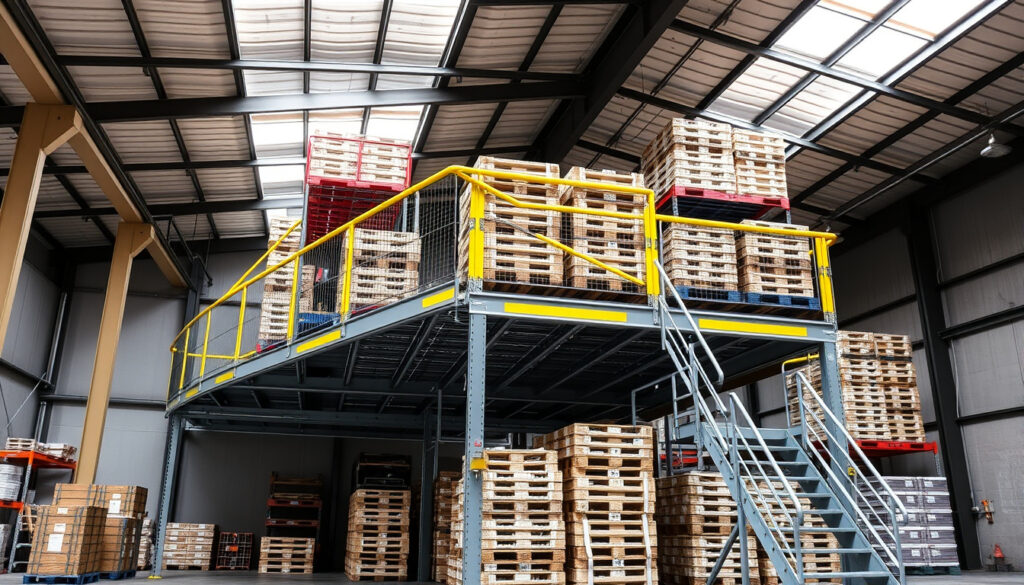
A mezzanine floor functions as an intermediate level positioned between the primary floors of a building, or between a floor and the ceiling. Unlike a complete additional story, a mezzanine occupies only a portion of the building’s footprint, making it distinct from conventional upper levels in both form and regulatory treatment.
These platforms typically feature open sides and rely on steel columns, pillars, walls, or existing structural elements for support. The construction utilizes materials including steel, wood, concrete, aluminum, or fiberglass, with decking options ranging from b-deck to wood or grating surfaces. Scale varies considerably, with some mezzanines spanning just 15 square feet while others extend beyond 250,000 square feet in large industrial facilities.
Overview: Key Facts About Mezzanine Floors
Intermediate partial floor between main levels, designed to increase usable space without expanding the building footprint
Storage, offices, operational platforms, retail displays, and residential living areas in appropriate settings
Cost-effective space expansion, faster installation than new construction, and flexible reconfiguration options
Generally not classified as a full story, avoiding additional tax assessments and full-story building permits in most jurisdictions
Key Insights
- Mezzanines prioritize vertical space optimization, making them ideal for high-ceiling environments such as warehouses, factories, and retail showrooms
- The installation involves semi-permanent, free-standing structural systems including roll-formed, structural, or rack-supported configurations
- Professional installation is strongly recommended for industrial applications to ensure compliance with load and safety requirements
- Fire ratings, handrails, and public access stairs vary significantly based on local building codes and intended use
- Mezzanines can support substantial weight, with some designs accommodating pallet jacks weighing 2,000 to 8,000 pounds alongside automated systems
- The versatility of mezzanine construction makes it suitable for adaptation during future relocations or business changes
- Unlike full floors, mezzanines do not completely enclose the space below, maintaining visibility and accessibility between levels
Snapshot Facts
| Characteristic | Details | Context |
|---|---|---|
| Typical Clearances | 2-3 meters minimum below and above | Varies by intended use and local codes |
| Area Limitations | Often restricted to less than 50% of floor below | Regulated differently than full stories |
| Cost Range | Highly variable by size and specifications | More economical than new builds or relocations |
| Construction Timeline | Faster than traditional expansion methods | Depends on complexity and compliance needs |
| Load Capacity | 2,000-8,000+ lbs depending on design | Critical for industrial and warehouse applications |
| Materials | Steel, wood, concrete, aluminum, fiberglass | Selected based on requirements and environment |
What Are the Main Uses and Purposes of a Mezzanine Floor?
The versatility of mezzanine floors allows them to serve diverse functions across multiple sectors. Understanding these applications helps property owners and facility managers identify opportunities within their own spaces.
Storage Applications
Storage represents one of the most common applications for mezzanine floors in commercial and industrial settings. These intermediate levels accommodate inventory, shelving systems, racking, and tools while maintaining usable space both below and above the platform. Warehouse operators particularly benefit from this approach, as it effectively doubles storage capacity without requiring facility expansion.
Office and Administrative Spaces
Mezzanines frequently house administrative functions including offices, meeting rooms, canteens, and welfare facilities. In manufacturing environments, these platforms support production operations through dedicated areas for supervisors, quality control stations, or management viewing points. Partitions and glazing allow customization to match operational requirements while maintaining separation from floor-level activities.
Operational Platforms
Industrial facilities utilize mezzanines as work platforms providing access to equipment, conveyor systems, and racking structures. Operations such as packing, sorting, and robotic system maintenance commonly occur on intermediate levels. The configuration supports efficiency gains by organizing workflows vertically and improving access to critical operational areas.
Retail Environments
Retail establishments employ mezzanines for additional display and selling space or for back-of-store storage operations. Public-access stairs and fire-rated designs accommodate customer traffic when mezzanines serve sales purposes. This application proves particularly valuable in urban locations where ground-floor expansion remains impractical.
Residential Applications
While less common than commercial uses, mezzanine floors appear in residential settings where high ceilings permit installation. Home applications include play areas, libraries, home offices, or bedrooms overlooking main living spaces. The intermediate level adds dramatic architectural interest while providing functional additional rooms without the commitment of a full second story.
Mezzanines break up large, open spaces without compromising ground-floor functionality, making them particularly valuable in buildings with generous ceiling heights that would otherwise go underutilized.
Mezzanine Floor Building Regulations and Requirements
Building regulations treat mezzanine floors differently from complete stories in most jurisdictions. This distinction carries significant implications for permitting, taxation, and compliance requirements that property owners must understand before proceeding with installation.
Classification and Permitting
Mezzanines are generally classified as non-story additions, which means they do not trigger the same permit requirements as constructing a full additional floor. This classification helps property owners avoid full-story building permits, additional property tax assessments, and the extensive approval processes associated with new construction.
However, the specific requirements vary considerably by jurisdiction. Building codes in different regions establish distinct criteria for what qualifies as a mezzanine versus a story, making local consultation essential before beginning any project.
Height Requirements
Adequate ceiling height remains essential for mezzanine installation. The space below the platform must provide sufficient clearance for its intended use, whether storage, offices, or operational functions. Similarly, the area above the mezzanine must accommodate headroom for occupants and any equipment positioned on the platform.
Minimum height requirements typically range from 2 to 3 meters for the lower clearance, though specific mandates depend on the intended use and local building codes. Facilities considering mezzanine installation should assess their ceiling heights against these requirements early in the planning process.
Fire Safety and Accessibility
Fire ratings represent a critical consideration, particularly for retail and public-access applications. Many jurisdictions require fire-rated construction for mezzanines that serve commercial purposes, with requirements varying based on occupancy type and building size.
Handrails, guardrails, and public-access stairs must meet specific dimensional and safety standards. Equipment platforms receive different treatment under most building codes, with distinct requirements that do not apply to functional floor spaces.
Building regulations differ significantly between countries and even between municipalities within the same country. For example, UK Approved Document B establishes specific fire safety requirements, while the US International Building Code addresses mezzanines through separate provisions. Consultation with local building authorities remains the most reliable way to confirm applicable requirements.
How Much Does a Mezzanine Floor Cost and How to Build One?
Cost considerations rank among the primary factors driving mezzanine adoption. The financial case for these intermediate floors rests on their ability to deliver additional usable space at a fraction of the cost and time required for conventional expansion.
Cost Factors and Value
Mezzanine floors prove significantly more cost-effective than new construction, facility relocation, or lease expansion. The exact cost varies based on multiple factors including size, materials, load requirements, customization level, and site conditions. Bespoke designs for heavy industrial use command higher prices than standard configurations.
Beyond initial installation costs, mezzanines offer potential tax depreciation benefits and remain relocatable if business circumstances change. The quick return on investment through space gains strengthens the financial case for many facilities considering this option.
Construction Process
Building a mezzanine floor involves a structured process designed to ensure safety, compliance, and functionality. Professional installation is particularly important for industrial applications where load capacity and structural integrity directly impact operational safety.
- Assess available ceiling height and identify specific needs, whether storage optimization, office creation, or operational platform installation
- Design a bespoke system selecting appropriate materials including steel or wood framing, support configurations, and decking options
- Install the free-standing structural system including necessary columns, stairs, and railings
- Verify compliance with fire safety, load capacity, and accessibility requirements applicable to the intended use
- Customize the finished space with shelving, partitions, or other features as needed for operational requirements
Durability and Load Capacity
Modern mezzanine construction supports substantial loads, with industrial-grade platforms designed to accommodate pallet jacks, robotic systems, and automated guided vehicles. Load capacities ranging from 2,000 to 8,000 pounds or more ensure compatibility with demanding warehouse and manufacturing operations.
Mezzanine Floor vs Balcony or Loft: Key Differences
Understanding how mezzanine floors differ from similar architectural features helps ensure appropriate application and realistic expectations. While these terms sometimes overlap in casual usage, meaningful distinctions exist in structure, purpose, and regulatory treatment.
Mezzanine vs Balcony
A balcony functions primarily as an open, projecting platform attached to an exterior wall, designed for outdoor leisure and viewing rather than functional space creation. Mezzanines, by contrast, serve utilitarian purposes within the building envelope, providing storage, offices, or operational areas. Balconies require exterior access and safety features appropriate to their leisure function, while mezzanines prioritize efficient space utilization.
Mezzanine vs Loft
Lofts typically describe open upper spaces in single-story residential homes, often created through converting non-living attic spaces into functional rooms. The term carries strong residential connotations and implies more open-plan configurations than commercial mezzanine applications. Mezzanines in commercial and industrial settings tend toward more structured, enclosed configurations suited to specific operational requirements.
Mezzanine vs Full Floor
The distinction between mezzanines and full floors carries significant regulatory and financial implications. Full floors count as additional stories under building codes, triggering property tax increases, full permit requirements, and comprehensive compliance obligations. Mezzanines avoid story classification, maintaining the existing regulatory and tax status of the building while still delivering functional additional space.
| Feature | Mezzanine | Balcony | Loft | Full Floor |
|---|---|---|---|---|
| Structure | Intermediate partial platform | Open projecting platform, external | Open upper space in single-story home | Complete enclosed story |
| Footprint | Smaller than building; vertical use | Small, attached to wall | Partial, in high-ceiling home | Full building width |
| Primary Purpose | Storage, office, operations | Outdoor leisure and viewing | Residential living and sleeping | Primary living and working levels |
| Regulatory Status | Not a full story; lighter permits | Exterior access and safety focus | Residential conversion rules | Counts as story; full codes and taxes |
| Typical Settings | Industrial, warehouse, retail | Residential and commercial exterior | Homes and urban conversions | Standard multi-story buildings |
The Evolution of Mezzanine Floors
Mezzanine floors emerged as an architectural solution for maximizing efficiency in spaces with generous ceiling heights. The concept originated in industrial settings where maximizing productive space within existing building footprints delivered significant operational and financial benefits.
- Early Industrial Origins: The mezzanine concept developed in factory and warehouse environments where vertical space optimization provided practical advantages over horizontal expansion
- Post-Industrial Adoption: Manufacturing and distribution facilities increasingly adopted mezzanines as the economic advantages became widely recognized
- Commercial Expansion: Retail operators discovered mezzanines provided valuable additional selling space in urban locations where expansion remained impractical
- Modern Applications: Contemporary use extends to e-commerce fulfillment centers, cold storage facilities, and cold chain logistics operations requiring efficient space utilization
- Residential Integration: Architectural trends toward open-plan living and urban loft conversions brought mezzanine concepts into residential design vocabulary
What Is Established Versus What Remains Unclear
Transparency about the certainty of available information helps readers understand the reliability of different aspects of mezzanine floor knowledge.
- Mezzanines are intermediate levels between main floors
- They typically do not count as additional stories under building regulations
- Construction utilizes steel, wood, or composite materials
- Common applications include storage, offices, and operational platforms
- Cost advantages over new construction or relocation are well documented
- Load capacities can reach several thousand pounds in industrial configurations
- Height requirements exist but vary by jurisdiction
- Specific 2025 building code updates are not comprehensively documented in available sources
- Precise per-square-foot cost figures vary too widely to establish reliable averages
- Detailed global regulatory comparisons remain limited in publicly available information
- Historical development lacks comprehensive documentation in current sources
- Regional variations in material standards require local consultation
- Future code developments are not predictable from existing information
The Architectural Context of Mezzanine Floors
Architecturally, mezzanine floors represent a sophisticated approach to volume utilization rather than mere space addition. In high-ceiling buildings, the visual and functional potential of vertical space often goes unrecognized until mezzanine installation reveals opportunities previously hidden in plain sight.
The modern appeal of mezzanines extends beyond pure functionality. Industrial-style architecture and the popularity of loft conversions have elevated mezzanine floors from purely utilitarian solutions to desirable design features. The intermediate level creates visual interest, defines spatial zones, and adds architectural drama without the permanence or expense of full additional stories.
In residential contexts, mezzanines serve increasingly as creative solutions for urban housing challenges. As cities become more densely populated and housing costs continue rising, the ability to maximize existing property through intermediate levels addresses real needs for additional living space.
Expert Perspectives on Mezzanine Applications
Mezzanines represent one of the most cost-effective ways to increase your usable floor area without the expense and disruption of new construction. The key lies in proper planning that accounts for both immediate needs and future flexibility.
When designed correctly, a mezzanine floor transforms unused vertical volume into productive space, effectively doubling your operational capacity in the same building footprint.
Summary: Key Takeaways
A mezzanine floor provides an intermediate level between the main floors of a building, designed to increase usable space without expanding the building’s footprint or triggering full-story classification under most building regulations. These versatile platforms serve diverse functions including storage, office space, operational platforms, and retail applications across commercial, industrial, and increasingly residential settings.
The cost-effectiveness of mezzanine floors compared to new construction or relocation makes them attractive options for businesses seeking space optimization. Construction involves professional installation of structural systems supporting the platform, with compliance requirements varying by jurisdiction and intended use. Understanding local building regulations, height requirements, and fire safety standards remains essential for successful implementation.
For those exploring self storage solutions or comparing different approaches to space optimization, mezzanine floors represent one established method worth considering alongside alternatives that may better suit specific circumstances and requirements.
Frequently Asked Questions
What is the purpose of a mezzanine floor?
A mezzanine floor serves to expand usable space within a building by creating an intermediate level. Common purposes include storage optimization, office creation, operational platforms, and retail display areas, all without requiring external expansion or full-story construction.
Is a mezzanine considered a full floor?
No, mezzanines are generally not classified as full floors under building regulations. This distinction means they typically avoid additional property tax assessments and full permit requirements that would apply to constructing an additional story.
What height is required for a mezzanine floor?
Height requirements vary by jurisdiction and intended use, but mezzanines generally require a minimum of 2 to 3 meters of clearance below the platform. The space above the mezzanine must also accommodate adequate headroom for occupants.
How much does a mezzanine floor cost?
Costs vary significantly based on size, materials, load requirements, and customization levels. Mezzanines remain more cost-effective than new construction or relocation, though precise figures require consultation with suppliers based on specific project requirements.
Can mezzanine floors support heavy equipment?
Yes, industrial mezzanine floors can support substantial loads. Some platforms accommodate weights ranging from 2,000 to 8,000 pounds or more, supporting pallet jacks, robotic systems, and automated guided vehicles.
What is the difference between a mezzanine and a loft?
Lofts typically describe open upper spaces in residential settings, often created through home conversions. Mezzanines more commonly refer to structured intermediate levels in commercial and industrial applications, though the terms sometimes overlap in contemporary usage.
Do mezzanine floors require planning permission?
Requirements vary by jurisdiction. While mezzanines generally face lighter permitting requirements than full stories, compliance with building codes, fire safety standards, and accessibility requirements remains necessary. Local authorities should be consulted for specific requirements.
Are mezzanine floors relocatable?
Many mezzanine systems are designed to be relocatable or dismantlable, offering flexibility for businesses that may need to change locations or reconfigure their spaces in the future.
More related posts
 Son Ye-jin (Ye Jin) Biography: Age, Husband, Movies, and Facts
 Where to Find Free Diet Plans: NHS, Mayo Clinic & PDFs
 Prayer Time in Mississauga: Fajr, Isha, Asr Today
 Population of Calgary 2025: Growth, Wealth & Demographics
 Shah Rukh Khan Movies: Filmography, Top 10, Latest Hits & Netflix
 Mr. Bean: Real Name, Net Worth, Age & Marriage Facts
 The Hunger Games: Sunrise on the Reaping – Plot & Cast
 Tire Comparison: How to Compare Sizes, Performance, and Brands
