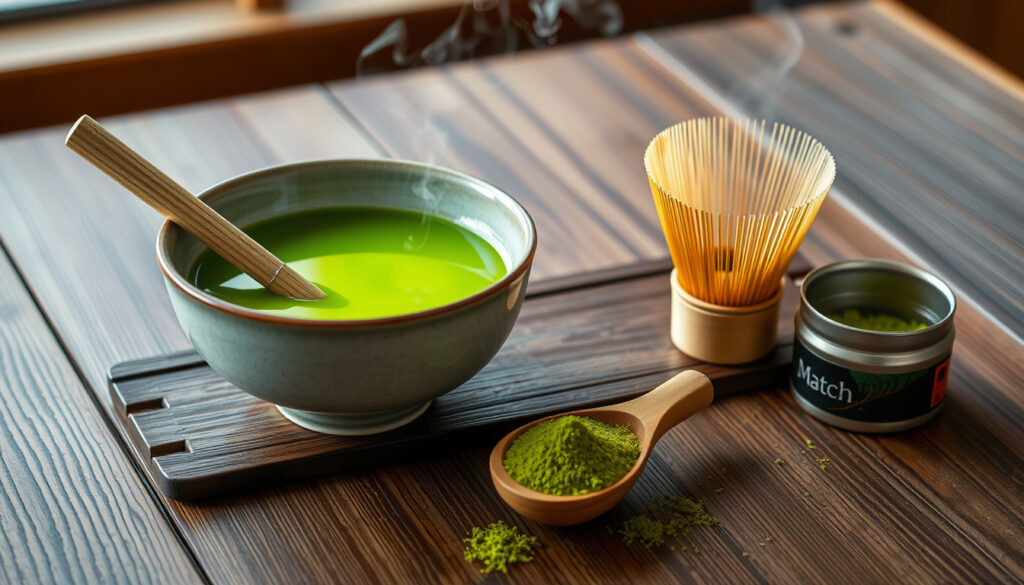
How to Make Matcha: Correct Method & Recipes
Anyone who’s bought a tin of matcha and ended up with a bitter, lumpy cup knows the frustration of a poorly made drink. The difference between a smooth, vibrant bowl and a disappointing one comes down to water temperature, whisking motion, and ingredient order — and this guide walks through the traditional usucha method, home-style recipes, and common pitfalls.
Traditional water temperature for matcha: 175°F (80°C) · Standard matcha powder per serving: 1/4 to 1/2 teaspoon (1-2 grams) · Whisking time for foam in usucha: 15–20 seconds
Quick snapshot
- Usucha uses 1.5–2g matcha with 60–80ml water at 70–80°C (Japan Tea Association (national tea body))
- Whisking in an M/W motion for 15–20 seconds produces fine foam (Ippodo Tea (specialist tea retailer))
- Sifting before whisking reduces clumps (Sazen Tea (tea equipment specialist))
- Exact caffeine content per serving varies widely by brand and harvest (Matchaful (matcha brand))
- Whether daily consumption above 2–3 cups has any adverse long-term effects is not well studied (Matchaful (matcha brand))
- The existence of a “miracle fruit” that treats diabetes is not validated by clinical evidence (Matchaful (matcha brand))
- Whisking time: 15–20 seconds for usucha foam (Ippodo Tea (specialist retailer))
- Water cooling time: about 90 seconds after boiling to reach 175°F
- Explore iced matcha latte and blended versions for hot weather
- Experiment with milk alternatives (oat, coconut) for different textures
- Learn proper chasen care to extend whisk life
Four key specifications stand out when preparing matcha correctly, regardless of the method chosen:
| Specification | Value |
|---|---|
| Optimal water temperature | 175°F (80°C) |
| Standard matcha serving size | 1/4 to 1/2 teaspoon (1-2 grams) |
| Caffeine per serving (approx.) | 35–70 mg (similar to espresso) |
| Ceremonial vs culinary grade | Ceremonial for plain water; culinary for lattes, baking |
| Whisking motion | Quick M or W pattern from the wrist |
| Traditional matcha type for usucha | Ceremonial grade |
| Common beginner mistake | Pressing whisk into bowl (weak foam) |
| Matcha storage | Air-tight, cool, dark place |
What is the correct way to make matcha?
Essential tools for matcha preparation
- Bamboo whisk (chasen): The traditional tool for creating a smooth suspension and foam. According to Tea Tips (educational tea resource), whisking is essential — a spoon will not create the same texture.
- Matcha bowl (chawan): Wide enough to allow the whisk to move freely. Marukyu Koyamaen (historic Kyoto tea purveyor) recommends warming the bowl before starting to maintain temperature stability.
- Sifter: A fine-mesh strainer to break up lumps. Sazen Tea (tea equipment specialist) notes that sifting alone isn’t enough — vigorous whisking is still needed.
- Kettle or water heater: To bring water to 175°F (80°C). Boiling water ruins the flavor.
Step-by-step traditional usucha method
- Warm the chawan with hot water and pour it out. Dry the bowl with a clean cloth.
- Sift 1.5–2 grams (about 1/4 to 1/2 teaspoon) of ceremonial-grade matcha into the bowl.
- Add a small amount of water (about 30 ml) at 175°F to form a paste. Stir gently with the chasen to incorporate.
- Add the remaining water (total 60–80 ml) and whisk briskly in an M or W motion for 15–20 seconds. Ippodo Tea (specialist retailer) describes this motion as quick and light, coming from the wrist.
- A fine foam with small bubbles should appear. If large bubbles dominate, you may be whisking too forcefully.
“The whisk should barely touch the bowl — think of cutting through the water, not stirring it.”
— Marukyu Koyamaen preparation guide (historic Kyoto tea purveyor)
“The whisking motion should be quick and light, coming from the wrist.”
— Ippodo Tea (specialist retailer)
“Sifting alone isn’t enough — vigorous whisking is still needed.”
— Sazen Tea (tea equipment specialist)
Common mistakes to avoid
- Using boiling water: Water above 195°F makes matcha bitter. Always cool boiled water for 90 seconds. Matcha.com (matcha brand) warns this is the #1 home mistake.
- Pressing the chasen into the bowl: Tezumi (Japanese tea tools retailer) says this creates weak foam and damages the whisk.
- Skipping the sifting step: Even with good whisking, un-sifted matcha can leave dry clumps.
The difference between a perfect usucha and a bitter, clumpy one comes down to three variables: water temperature (175°F not boiling), whisking motion (M/W from the wrist, not the elbow), and the pre-sifting step. Skipping any one of them guarantees a disappointing cup.
How to make a matcha drink at home?
Matcha latte recipe
- Sift 1 teaspoon of culinary-grade matcha into a bowl or mug.
- Add 2 tablespoons of hot water (175°F) and whisk to form a smooth paste.
- Steam or warm 6–8 ounces of milk (dairy or plant-based).
- Pour the milk into the matcha paste and stir or whisk gently.
- For a hot latte, serve immediately. For an iced variant, pour over ice after the paste step.
BBC Good Food (trusted recipe publisher) suggests adding a dash of vanilla if the matcha tastes bitter.
Iced matcha recipe
- Make a paste with 1 teaspoon matcha and 2 tablespoons hot water.
- Fill a glass with ice and pour your milk of choice (or water) over the ice.
- Pour the matcha paste over the milk and stir. The contrast of cold milk and warm paste creates a layered look.
Quick matcha using a jar or blender
- Mason jar method: Add matcha, water, close lid, shake vigorously for 15 seconds. Matchaful (matcha brand) says this works in a pinch but produces a thinner foam.
- Electric milk frother: Works well for single servings — just whisk the matcha and water together before adding milk.
- Blender: Blends matcha, water, and milk in 10 seconds for a silky, clump-free drink.
Home cooks often use boiling water straight from the kettle for iced matcha, thinking ice will cool it fast enough. The bitterness from overheated matcha remains even after chilling. Heat the water correctly — it makes that much difference.
The pattern: proper water temperature is non-negotiable even for iced versions.
Do I mix matcha with milk or water?
- Traditional with water (usucha): Ceremonial-grade matcha is designed to be drunk straight with water. The UK Tea & Infusions Association (industry body) explains that usucha is thin and frothy, koicha is thick and not foamy.
- Matcha latte with milk: Culinary-grade matcha is ideal for lattes because its slightly stronger taste holds up against milk. Marukyu Koyamaen (historic Kyoto tea purveyor) notes that lower grades can taste harsh when prepared thin, so they are better used in milk-based drinks.
- Best milk types: Oat milk and coconut milk pair well because they don’t overpower the matcha. Dairy milk can mask the delicate flavor — but many enjoy it.
The trade-off: water lets the tea leaf’s character shine, while milk adds creaminess and tames bitterness. Your choice depends on the grade of matcha and whether flavor purity or comfort is the priority.
How to make matcha without whisk?
Using a mason jar or shaker bottle
- Add matcha powder and water (175°F) into the jar.
- Close lid tightly and shake vigorously for 15–20 seconds.
- Open carefully — pressure builds up. Pour and enjoy.
Using a milk frother or electric whisk
- A handheld electric milk frother works for single servings. Whisk the matcha and hot water together in a tall cup to avoid splatter.
- An electric whisk (like a small immersion blender) also works, though it may incorporate more air than desired.
Using a blender for smooth matcha
- Blend matcha, water (or milk), and any sweetener for 10–15 seconds. This method guarantees a clump-free drink and is the fastest for iced versions.
No-whisk methods sacrifice the fine foam of traditional usucha but are perfectly acceptable for everyday lattes and iced drinks. The key is still water temperature — none of these tools can fix bitterness from overheated water.
How to make matcha tea taste good?
Choosing quality matcha powder
Marukyu Koyamaen (historic Kyoto tea purveyor) emphasizes that ceremonial-grade matcha has a natural sweetness and smoother taste. Culinary-grade matcha can be more astringent. For a pleasant plain cup, invest in ceremonial grade.
Sweeteners and flavor pairings
- Add sugar, honey, agave, or maple syrup to balance bitterness. Start with 1/2 teaspoon per serving.
- Vanilla, lavender, or mint syrups complement matcha without overpowering it.
- For savory notes, a pinch of salt can mute bitterness.
Avoiding bitterness
- Water temperature below 175°F reduces bitterness significantly. Ippodo Tea (specialist retailer) states their recommended range is 70–80°C (158–176°F).
- Don’t over-whisk: beyond 20 seconds, you risk incorporating too much air and creating a thin, watery foam.
- Don’t use too much powder — stick to 1/4 to 1/2 teaspoon per serving. Chanoyu World (tea ceremony resource) warns that excess powder shifts usucha toward koicha-style thickness, which can be heavy and unpleasantly strong.
For a coffee drinker switching to matcha, bitterness is the most common reason for giving up. The fix isn’t more sugar — it’s buying a decent ceremonial-grade powder and using a kitchen thermometer for water temperature. That single change turns an average cup into something worth repeating.
The catch: quality and temperature are the foundation; everything else is customization.
Frequently asked questions
What is the difference between ceremonial and culinary matcha?
Ceremonial matcha is made from the highest-grade young leaves and is intended to be drunk plain with water. Culinary matcha comes from later harvests and has a stronger, slightly more bitter flavor that holds up in lattes, smoothies, and baking.
Can I make matcha without a bamboo whisk (chasen)?
Yes. Use a mason jar with lid and shake vigorously, or use an electric milk frother, or a blender. The texture will be less foamy but still smooth.
How much caffeine does one cup of matcha contain?
A single 1-gram serving contains roughly 35–70 mg of caffeine, which is comparable to an espresso. Exact values vary by brand and harvest.
Is it safe to drink matcha on an empty stomach?
Most people tolerate it well, but if you are sensitive to caffeine or have a sensitive stomach, consider eating something light first. The L-theanine in matcha may help reduce jitters.
What is the best milk for a matcha latte?
Oat milk and coconut milk are popular for their creamy texture and neutral taste. Dairy milk can mask matcha’s flavor. Unsweetened almond milk works but may result in a thinner drink.
How do I store matcha powder to keep it fresh?
Store matcha in an airtight container in a cool, dark place (pantry or refrigerator). Avoid exposure to light, air, and moisture. Use within two months of opening for best flavor.
Can matcha help with weight loss?
Some studies suggest that matcha’s combination of caffeine and catechins may slightly boost metabolism, but any effect is modest. It is not a weight-loss miracle — consider it part of a healthy diet rather than a solution.
For those who struggle with bitterness, the fix is simple: invest in a kitchen thermometer and a tin of ceremonial-grade matcha from a reputable source like Marukyu Koyamaen (historic Kyoto tea purveyor) or Ippodo Tea (specialist retailer). For home cooks in North America and Europe adapting matcha to a café-style latte, the trade-off is clear: water-based preparation exposes every flaw in the powder, so go for culinary-grade and a good splash of oat milk. Your flavor experience depends entirely on temperature and quality.
More related posts
 Inter Miami vs New York City FC Lineups: Starting XIs
 Where to Find Free Diet Plans: NHS, Mayo Clinic & PDFs
 Tren Twins: Who They Are, Height, Net Worth & More
 How Old Is Tom Cruise – Age, Height, Family, Career Facts 2024
 What Time Is It in the UK Now? Current Time, BST & GMT
 Tire Comparison: How to Compare Sizes, Performance, and Brands
 Denver Broncos vs Las Vegas Raiders Match Player Stats – Box Score & Analysis
